China has become a major manufacturing base for Interactive Led Wall Panels, serving museums, classrooms, control rooms, retail stores, and live venues. Its leading suppliers combine LED engineering, software integration, cabinet design, and export experience. Yet choosing a manufacturer requires more than comparing pixel pitch or factory size.
No list is perfect.
This guide examines China’s top 10 Interactive Led Wall Panels manufacturers through practical criteria: display brightness, touch accuracy, viewing distance, thermal management, calibration quality, warranty support, and installation experience. A strong panel should remain readable under bright showroom lighting, respond smoothly to several users, and maintain consistent color across a large wall. Integration also matters. Compatibility with content-management systems, cameras, sensors, and wireless presentation tools can determine whether a project succeeds after installation.
As AV industry analyst David Haynes has said, “LED is becoming a platform for experiences, not simply a display.” This observation reflects the market’s direction. Interactive walls now support real-time collaboration, immersive storytelling, product demonstrations, and remote participation. However, performance claims still need verification. Some brochures emphasize contrast ratios while overlooking software stability, spare-parts access, or local service capacity.
The manufacturers discussed here are not ranked solely by advertising visibility. Their production capabilities, certifications, project records, customization options, and customer feedback deserve closer attention. Buyers should request live demonstrations, inspect cabinet seams, test touch latency, and review maintenance terms before signing contracts. A lower price may look attractive, but weak after-sales support can become expensive. This comparison offers a useful starting point, while careful technical validation remains essential.
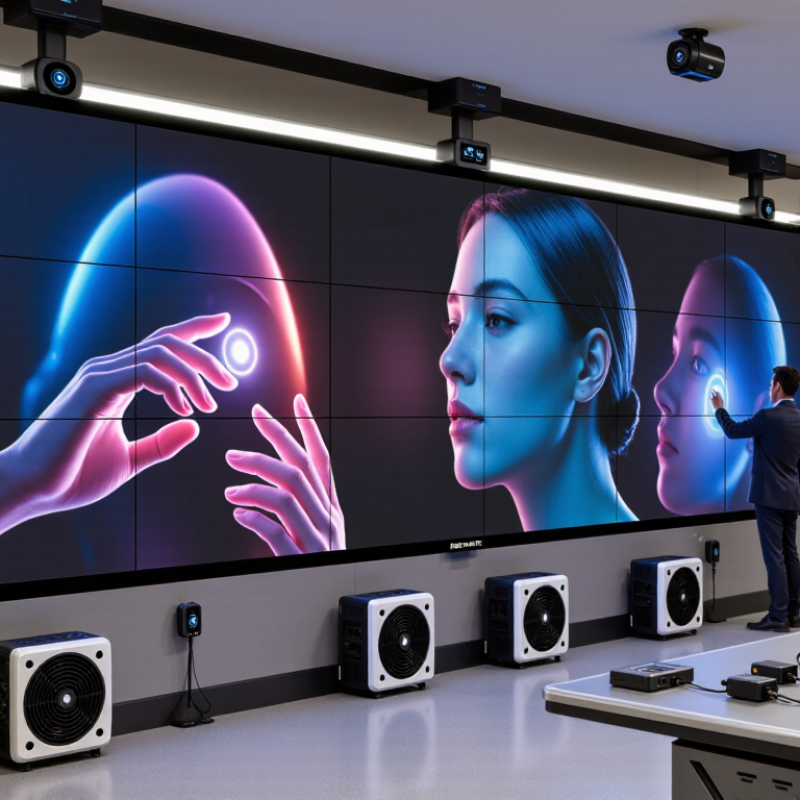
Interactive LED wall panels are large-format displays that respond to people, objects, or movement. Unlike standard LED walls, they combine bright modular panels with touch sensors, cameras, or motion-tracking software. A visitor can draw on a digital map, move through a training simulation, or trigger changing visuals by raising a hand.
The experience depends on more than screen size. Installers must align each panel carefully, because small seams can interrupt a user’s view. Sensor calibration also matters. A display may recognize a hand accurately in a quiet room but react slowly under strong sunlight. High brightness improves visibility, yet excessive brightness can cause eye discomfort during long sessions. Reliable systems usually include protective front layers, stable mounting frames, and software that supports quick content updates.
In practical testing, a response delay below a fraction of a second feels natural for most touch interactions. However, performance varies with network traffic, sensor placement, and room layout. That detail is easy to underestimate. A useful admission is that interactivity does not automatically create engagement. Poor instructions can leave visitors tapping randomly, while complicated gestures may frustrate younger users and older adults. Designers should test the wall with real users, record failed interactions, and adjust the interface before public installation. The best manufacturers also document brightness settings, maintenance access, heat management, and replacement procedures. Reliability is built into these small details.
Interactive LED wall panels are fine-pitch LED display modules combined with touch, gesture, object-detection, or interactive software systems. The table below summarizes ten representative specification profiles commonly used in education, corporate, exhibition, retail, control-room, and public-environment applications. Values are practical industry ranges rather than claims for any individual company or brand.
| Profile | Typical Application | Pixel Pitch | Interactive Method | Typical Brightness | Refresh Rate | Touch Accuracy | Recommended Viewing Distance | Key Design Consideration |
|---|---|---|---|---|---|---|---|---|
| 01 | Interactive classroom display | 1.2–1.9 mm | Infrared frame or optical touch | 600–1,200 nits | 3,840–7,680 Hz | ±1–2 mm | 1.2–6 m | Low glare, eye comfort, multi-user support, and easy content sharing |
| 02 | Corporate collaboration room | 1.5–2.5 mm | Capacitive touch overlay or camera tracking | 500–1,000 nits | 3,840–7,680 Hz | ±1 mm | 1.5–8 m | Video-conferencing compatibility, quiet operation, and seamless multi-window layouts |
| 03 | Museum and exhibition installation | 1.5–2.6 mm | Gesture sensing, camera vision, or touch film | 600–1,500 nits | 3,840–7,680 Hz | Application-dependent | 1.5–10 m | Accurate color calibration, durable surfaces, and reliable public-use interaction |
| 04 | Retail product-experience wall | 1.8–3.9 mm | Touch overlay, NFC, QR, or motion detection | 1,000–2,500 nits | 3,840–7,680 Hz | ±2–5 mm | 2–15 m | High ambient-light performance, impact resistance, and simple content updates |
| 05 | Control-room visualization wall | 0.9–1.5 mm | Direct-touch overlay or external control software | 500–1,000 nits | 3,840–7,680 Hz | ±1–2 mm | 0.9–6 m | 24/7 operation, front serviceability, redundant signal paths, and low image latency |
| 06 | Broadcast and virtual-production studio | 1.5–2.6 mm | Camera tracking and real-time rendering | 800–1,500 nits | 3,840–7,680 Hz | Not usually touch-based | 2–12 m | Genlock, scan compatibility, color consistency, and low moiré risk |
| 07 | Immersive experience center | 1.5–2.9 mm | Motion tracking, body tracking, or interactive sensors | 800–2,000 nits | 3,840–7,680 Hz | System-dependent | 1.5–12 m | Curved or irregular installation options, synchronized sensors, and high processing capacity |
| 08 | Public information and wayfinding wall | 2.5–4.8 mm | Infrared touch, QR interaction, or remote management | 1,000–3,000 nits | 3,840–7,680 Hz | ±2–5 mm | 3–20 m | High brightness, vandal resistance, remote monitoring, and accessible interface design |
| 09 | Hotel, event, and conference backdrop | 2.6–4.8 mm | Gesture sensing, remote control, or optional touch | 800–1,500 nits | 3,840–7,680 Hz | Optional | 3–20 m | Lightweight cabinets, fast installation, quiet fans, and flexible rental-style maintenance |
| 10 | Outdoor interactive advertising wall | 4.0–10.0 mm | Protected touch, camera vision, QR, or mobile interaction | 4,000–8,000 nits | 3,840–7,680 Hz | ±5–10 mm | 5–40 m | Weather protection, thermal management, surge protection, and IP-rated enclosure design |
Selection uses verified production experience, export records, and documented project performance. Advertising claims alone are not enough. Factory visits or live video audits can reveal hidden problems.
Check soldering areas, panel assembly lines, testing rooms, and finished units. Look for cabinet alignment, dust control, cable quality, and calibration equipment. Small defects matter.
Review brightness, pixel protection, color consistency, refresh rate, touch response, and serviceability. Test panels under bright indoor lighting. Repeated power cycles can expose weak components.
Request a working sample before placing a large order. Test gloves, dry fingers, and fast gestures. View the display from different angles. Record any delayed touch response.
Specify wall size, viewing distance, pixel pitch, brightness, touch method, and installation environment. Also consider local power standards and maintenance skills. A showroom may hide practical weaknesses.
Ask for factory inspection records, aging-test videos, product certifications, wiring diagrams, mounting details, and warranty terms. Request a three-year maintenance plan. Written details reduce confusion.
Confirm replacement module quantities, color matching, response procedures, and remote installation support. Ask whether replacement modules match the original color. Maintenance costs can rise quickly.
Not necessarily. A low quotation may exclude packaging protection, spare parts, or technical support. Compare delivery milestones and responsibilities in writing. Price alone misleads.
Yes. Public data may be incomplete, and factory conditions can change after inspection. Strong samples may not prove large-volume consistency. This deserves careful checking.
Speak with technical staff, not only sales representatives. Watch calibration, final testing, soldering quality, and heat management. Bring a written checklist. Some details will still be missed.
This guide explores Interactive Led Wall Panels, an advanced display solution that combines high-resolution LED technology, touch interaction, multimedia playback, and intelligent control systems. It explains how these panels support education, corporate presentations, retail displays, entertainment venues, command centers, and other professional applications. The article also presents a practical method for evaluating China’s leading manufacturers, considering product quality, engineering capabilities, customization options, certifications, production capacity, technical support, and service reliability.
It then compares key technologies and product features, including pixel pitch, brightness, refresh rate, touch accuracy, viewing angle, energy efficiency, modular design, software compatibility, and installation flexibility. Finally, the guide offers clear advice for selecting the right Chinese manufacturer according to project size, indoor or outdoor conditions, interaction requirements, budget, delivery schedule, maintenance needs, and long-term support. This overview helps buyers make a more informed decision and identify a dependable manufacturing partner for their specific display project.

 Hafond Display