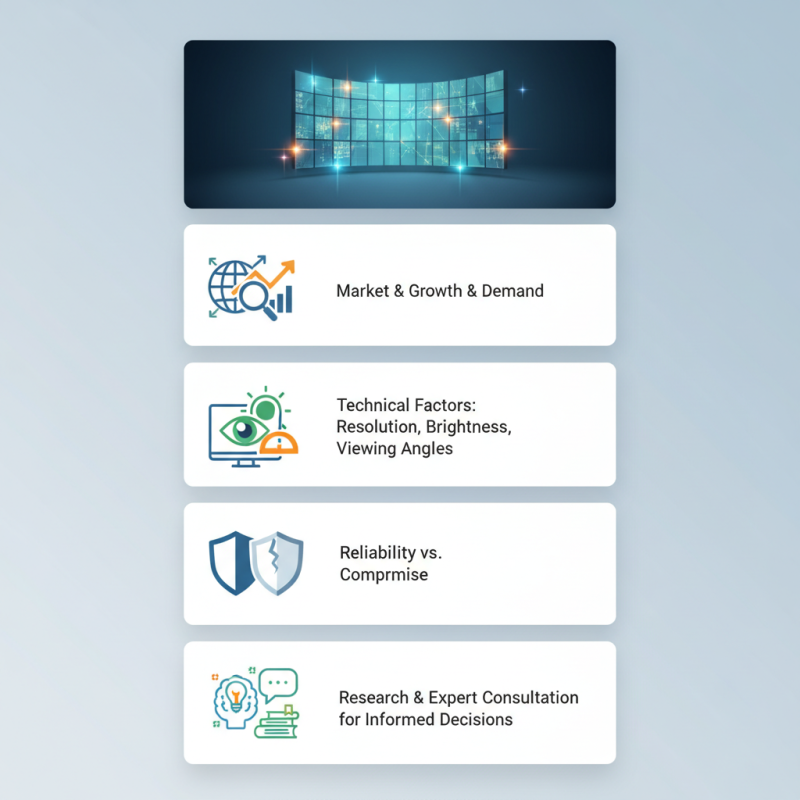
When considering the purchase of LED Screen Wall Panels, understanding the market landscape is vital. The global market for LED displays is projected to reach $80 billion by 2027, according to a report by MarketsandMarkets. This rapid growth signifies the increasing demand for high-quality visual solutions in various sectors, including events, advertising, and corporate environments.
Renowned industry expert, Dr. Emily Chen, emphasizes the importance of quality, stating, "Choosing the right LED Screen Wall Panels can make or break your visual strategy." Her insights underline the notion that not all panels are created equal. Factors such as resolution, brightness, and viewing angles can greatly impact the user experience.
Buyers often face challenges when selecting the best options. While many products boast vibrant colors and sharp images, less reliable brands may compromise longevity and performance. Evaluating these attributes can prove to be a daunting task. Therefore, thorough research and expert consultation are essential for making informed decisions in this evolving market.
Understanding Different Types of LED Screen Wall Panels Available in the Market
When selecting LED screen wall panels, it is crucial to understand the different types available. For instance, indoor and outdoor panels are designed for distinct environments. Indoor panels typically offer higher resolutions, essential for close viewing. Outdoor panels, however, must withstand weather conditions, meaning they often have lower pixel densities but are built for durability.
Market research indicates that the global LED display market will reach $70 billion by 2026, driven by the rising demand for visually engaging content. Within this market, fine-pitch LED panels are becoming increasingly popular. They offer superior image quality with pixel pitches below 2.5mm. However, these panels can be pricey and may not be necessary for every application.
Choosing the right panel also involves considering brightness levels. Indoor panels usually operate at 400-800 nits, while outdoor panels require at least 1500 nits for visibility in sunlight. Buyers might overlook these details, leading to poor performance in specific environments. Ultimately, understanding these specifications ensures you select a panel that suits your needs.
Evaluating Resolution and Pixel Density for Optimal Display Quality
When selecting LED screen wall panels, resolution and pixel density are critical. These factors directly influence the image clarity and overall display quality. Higher resolution ensures sharper images. Pixel density measures how closely pixels are packed. A higher pixel density usually means better detail.
Consider the environment where the display will be used. In larger spaces, a lower pixel density can be acceptable. However, for close viewing distances, like in retail displays, higher pixel density is essential. Think about how the content will be displayed. Detailed graphics require greater resolution to maintain clarity.
When making your choice, compare different options. Look for panels with similar specifications. Review feedback from other users about their experiences. Always prioritize quality over cost. Investing in a superior display often pays off in the long run. Remember, an inadequate choice may lead to poor viewer experiences.
Balancing resolution and pixel density is key for optimal results. Aim for a display that meets your specific needs, ensuring a captivating visual presentation.
Assessing Brightness Levels: The Importance of Nits in LED Panels
When selecting LED screen wall panels, brightness is a critical factor. Brightness levels are measured in nits. A higher nit value indicates a brighter screen, which is vital for visibility in different environments. For instance, outdoor panels typically require brightness levels of at least 3,000 nits. In contrast, indoor panels often function well at 1,000 to 1,500 nits.
It's essential to assess lighting conditions where the panels will be used. A panel placed in direct sunlight needs higher brightness to remain legible. Yet, many buyers overlook this aspect, leading to poor visibility. Additionally, consider how brightness affects energy consumption. Higher brightness often translates to higher energy use. Balancing these needs is crucial to avoid unexpected costs.
Understanding your audience plays a significant role in this decision. Engage with potential users to understand their preferences and needs. It’s also worth noting that overly bright screens can cause eye strain. Some research suggests that a screen's brightness should be adjusted to the surrounding light. These reflections can help guide your choice, ensuring the panel serves its purpose effectively.
Exploring Viewing Angles and Their Impact on Audience Experience
When selecting LED screen wall panels, viewing angles play a crucial role in audience experience.
Research indicates that a viewing angle of 160 degrees significantly enhances visibility from different positions. For instance, when attendees sit at various points, the display must remain vibrant and clear. A narrow viewing angle can lead to color distortion, making the content less engaging.
In large venues, the placement of LED panels can impact sightlines. Studies show that an increased viewing angle correlates with better audience satisfaction.
Assessing this parameter can lead to a more immersive experience. However, some users may overlook this aspect, focusing solely on resolution and brightness. This oversight could diminish the overall effectiveness of the display.
It’s important to consider why angle matters. If people cannot see the screen properly, they may miss vital information. This can be particularly detrimental in crowded settings like concerts or conferences.
Knowledge of viewing angles can assist in selecting the right panel. Ultimately, this understanding strengthens the connection between the audience and the content being presented.
Calculating Budget: Key Costs to Consider When Selecting LED Panels
When considering LED screen wall panels, your budget plays a critical role. Factors such as screen size, resolution, and technology directly affect costs. A larger display often means a higher price point. For example, a 10-foot screen can start at several thousand dollars. Higher resolution panels also command premium prices. It's essential to think about your specific needs.
Installation and maintenance costs should not be overlooked. Professional installation can add significant fees, often ranging from hundreds to thousands of dollars. Maintenance is another ongoing expense. Some panels require regular servicing, which can add up over time. You should understand these factors to avoid surprise costs later.
Don’t forget to evaluate your long-term requirements. The upfront cost is important, but think about how the panel will perform over time. Will it need upgrades down the line? How often will it be used? These questions can help clarify your budget. It's easy to get caught up in features and forget about practical aspects. Reflecting on these points will lead to a more informed decision.
FAQS
: Resolution directly impacts image clarity and overall display quality. Higher resolution leads to sharper images.
Pixel density measures how closely pixels are packed. A higher pixel density typically means better detail.
Consider the environment and viewing distance. For close views, like retail displays, a higher pixel density is crucial.
Brightness affects visibility and is measured in nits. Higher nit values indicate brighter screens for various environments.
Outdoor panels generally need brightness levels of at least 3,000 nits for proper visibility in sunlight.
Lighting conditions are vital. Panels in direct sunlight need higher brightness to remain legible and effective.
Higher brightness often results in increased energy use. It's essential to balance brightness needs to manage costs.
Engaging with potential users helps understand their preferences, ensuring the panel meets their needs effectively.
Yes, excessively bright screens may lead to eye strain. Adjusting brightness according to surroundings can help.
Review options, compare specifications, and consider user feedback. This helps avoid poor choices that could impact viewer experience.
Conclusion
When choosing LED screen wall panels, it is crucial for buyers to understand the various types available in the market, as each type serves different needs and applications. Evaluating resolution and pixel density is vital to ensure optimal display quality, as higher pixel density translates to clearer and more detailed images. Additionally, assessing brightness levels, measured in nits, is essential for effective visibility in various lighting conditions, thereby enhancing the audience experience.
Furthermore, considering viewing angles can dramatically affect how the content is perceived by the audience, especially in larger venues. Lastly, buyers must budget appropriately, factoring in key costs such as installation and maintenance, which can significantly impact the overall investment. By following these essential tips, buyers can make informed decisions that align with their specific requirements for LED screen wall panels.

 Hafond Display